You open a closet in July and catch that smell. It's musty, a little sweet, and it wasn't there in winter. Maybe the hardwood in the hall has started to cup at the edges, and you can't work out why. In most homes with a crawl space, it's coming from below.
Crawl space encapsulation seals that space off and gets the humidity under control. Some folks write it crawlspace encapsulation; same job. We measure first and show you the numbers before we propose anything, because plenty of crawl spaces don't need the full treatment.
The short answer
Crawl space encapsulation seals the space under your home with a thick liner, closed vents and a dehumidifier, so damp air and ground moisture stop reaching your floors. It's worth it when humidity stays above 60% or mold is growing. If yours stays dry, you may not need it.
What is crawl space encapsulation?
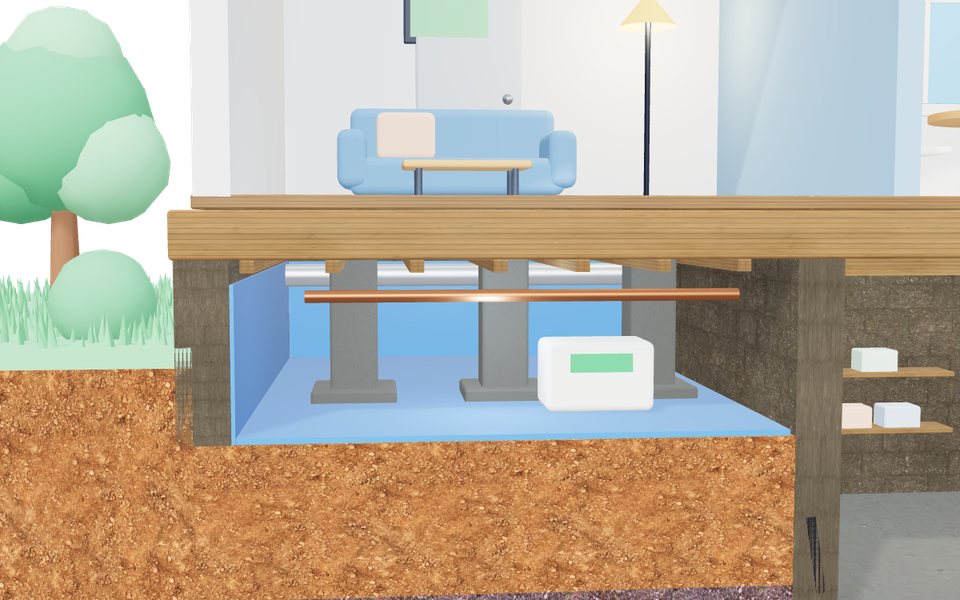
Crawl space encapsulation means turning a damp, vented space into a sealed, dry one. We lay a heavy liner of 12–20 mil plastic over the dirt and up the walls, tape every seam, close the vents, insulate the walls and add a dehumidifier.
It matters because warm air rises through a house and pulls air up from below, which is called the stack effect. So what smells bad down there is what you're breathing in the bedroom.
A thin sheet of 6 mil plastic isn't the same thing. A loose crawl space vapor barrier slows ground moisture a little, but the walls stay bare and humid air keeps coming through the vents. It's a start, not a sealed space.
- Humid air pours in through open vents.
- It rises into your home and feeds mold on the joists.
- A thick liner seals the floor and walls, and the vents close.
- A dehumidifier holds the air under 60%.
Signs your crawl space needs encapsulating
Humidity is the number to watch. If your crawl space sits above 60% for weeks at a time, wood starts soaking up moisture and mold has what it needs. Here's what that usually looks like:
- A musty smell on the lower level, worse in summer
- Humidity above 60% on a hygrometer
- Cupping or buckling hardwood floors
- Sweating ducts and cold water pipes
- Mold on the joists or a white, fuzzy film on wood
- Bugs or rodents setting up house
- Energy bills that keep creeping up
You can test this yourself for about $15. Buy a digital hygrometer, set it just inside the access door and check it after a week. Read it in August if you can.
If you've got actual puddles instead of damp air, that's a different problem. Our guide on why your crawl space gets wet walks through where it comes from.
What's inside our crawl space encapsulation system
To encapsulate crawl space areas properly, every crawl space encapsulation system we install has the same five parts. What changes is how much of each your house needs, and we size them from what we measure.
Heavy-duty vapor barrier
The liner goes across the floor and up the walls, about 6 inches below the sill. Seams overlap by at least 6 inches and get taped. We seal it around every pier and post so there's no bare dirt left to breathe.
Sealed vents and rim joists
Open vents let humid summer air in, so we seal them from the inside. The rim joist, the board on top of your foundation wall, is full of small gaps, and we close those too.
Crawl space insulation
We put foam board on the walls instead of fiberglass between the joists. Wet fiberglass sags, falls and grows mold, and you've probably seen it hanging down there. Crawl space insulation on the walls keeps the whole space inside your home's envelope.
A dehumidifier sized for your space
Dehumidifiers are rated in pints per day, meaning how much water they can pull from the air. We size yours by the square footage and your local climate. The condensate gets piped to a drain or a pump, so nobody has to empty a bucket.
Drainage when water is coming in
A liner won't stop liquid water. If you get standing water after storms, it has to be drained first, or it ends up trapped under the plastic. That's where crawl space waterproofing comes in, and we'll tell you if you need it.
How we encapsulate a crawl space, step by step
Encapsulating a crawl space takes five steps, and the order matters. Skip the third one and you've sealed in the problem.
- Inspect and take readings. We measure humidity, wood moisture and temperature, then photograph everything.
- Clean out. Debris and old fiberglass come out, and we bag it so it doesn't drag through your home.
- Fix water and wood first. Drains go in if needed. Rotted wood gets handled with crawl space repair before it's covered.
- Install the liner and seal. This is the main part of encapsulating a crawl space: liner, tape, sealed vents, wall insulation.
- Add the dehumidifier and verify. We set it, route the condensate and check that the readings come down.
Got a partial basement? Basement crawl space encapsulation works the same way, but we also seal the opening between the two.
Is an encapsulated crawl space worth it?
An encapsulated crawl space is worth it when you've got a measured moisture problem and plan to stay a while. It's a harder sell if your space tests dry. Here's the honest version of both sides.
The upsides
You get drier air, less mold, steadier floors and often lower heating and cooling costs.
People ask, does crawl space encapsulation add value to home sales? Inspectors and buyers tend to like seeing it, and a clean, sealed space removes an objection. We won't promise a dollar figure, because nobody honest can.
The negatives to crawl space encapsulation
It isn't cheap. The dehumidifier uses electricity and needs a yearly check. The liner can be damaged by anyone crawling around with tools. Gas furnaces and water heaters down there may need a combustion air check, because they can't draw from sealed vents. In some areas, radon is worth testing for afterward, and the EPA's radon guide is a good place to start.
If a salesperson skips all that, keep your wallet closed.
Sealed or vented: how they compare
Sealed crawl spaces usually win in humid climates. Here's more on whether to close your vents.
| Factor | Vented | Sealed |
|---|---|---|
| Humidity | Follows the outdoor air | Held under 60% |
| Energy use | Cold floors, ducts in humid air | Usually lower |
| Mold risk | Higher in humid months | Much lower |
| Upfront price | Low | Higher |
| Upkeep | Check insulation and vents | Yearly dehumidifier check |
What it usually runs
Encapsulation usually runs $1,500–$15,000 in total, or about $3–$7 per sq. ft.. Severe jobs can reach $10 per sq. ft.. Those are typical ranges, and your exact price depends on what we find at the inspection. Here's the full breakdown of what sealing a crawl space costs.
Not sure you need any of this yet? We offer free moisture readings with no pressure to sign. Free moisture readings are often the only thing people need to settle the question.
Crawl space encapsulation questions
Should I encapsulate my crawl space?
Yes, if humidity sits above 60% most of the time or you've got mold on the joists. If the space stays dry and the air tests fine through summer, you may not need it. A cheap hygrometer left down there for a week tells you a lot before you spend anything.
Can a vapor barrier over a crawl space floor cause mold?
It can if it's installed badly. Loose plastic with no humidity control can trap moisture under it and against wood, and that's when mold shows up. That's why we seal the seams and vents and control the air with a dehumidifier instead of just laying sheeting over dirt.
Do I need a dehumidifier after encapsulation?
Almost always, especially in humid climates. Sealing stops new damp air from coming in, but what's already in the wood and the air still has to go somewhere. In a dry climate with a very tight space we may tell you to monitor first, then decide based on the readings.
How long does encapsulation last?
A well-installed liner lasts many years. The part that wears out first is the dehumidifier, which needs a yearly check and eventually a replacement. Liners last longest when nobody drags tools across them, so we show you where to walk if you need to get to plumbing.
How long does the job take?
Most jobs take 1–3 days. A clean, open 1,000 sq. ft. space might wrap up in a day or two. Tight access, old insulation to haul out or wood repairs can push it to the long end, and we'll tell you the plan before we start.
What is an encapsulated crawl space?
An encapsulated crawl space is one that's sealed off from outside air and ground moisture. It has a thick liner on the floor and walls, closed vents, sealed rim joists and usually a dehumidifier. The result behaves like a small, dry room under your house instead of a damp cave.
How do you encapsulate a crawl space?
We fix water and damaged wood first, then clean the space and lay a 12 to 20 mil liner over the floor and up the walls. We tape the seams, seal the vents and rim joists, insulate the walls and set a dehumidifier. Then we check the readings again.
What is a vapor barrier in a crawl space?
A vapor barrier is a plastic sheet that slows ground moisture from rising into the crawl space air. Thin 6 mil plastic is common and helps a little. It isn't the same as encapsulation, because it usually sits loose, leaves the walls bare and does nothing about the air coming through the vents.
Is crawl space encapsulation a scam or the real deal?
It's the real deal when the numbers call for it, and a waste when they don't. A real contractor shows you humidity and wood moisture readings first. Be wary of anyone selling the full system before measuring, or pushing it for a dry space with no mold.
Run into a term you don't know? This may help: foundation repair glossary.