The short answer
Crawl space venting works best in dry climates. In humid regions, open vents often let in more moisture than they let out, which is why many homes do better sealed. In freezing weather, close vents to protect your pipes. Don't just block vents without a plan for controlling humidity.
Key takeaways
- Open vents can add moisture in humid summers.
- Close vents in hard freezes to protect your pipes.
- Sealing only works with a liner and humidity control.
- Your local building code has the final word on ventilation.
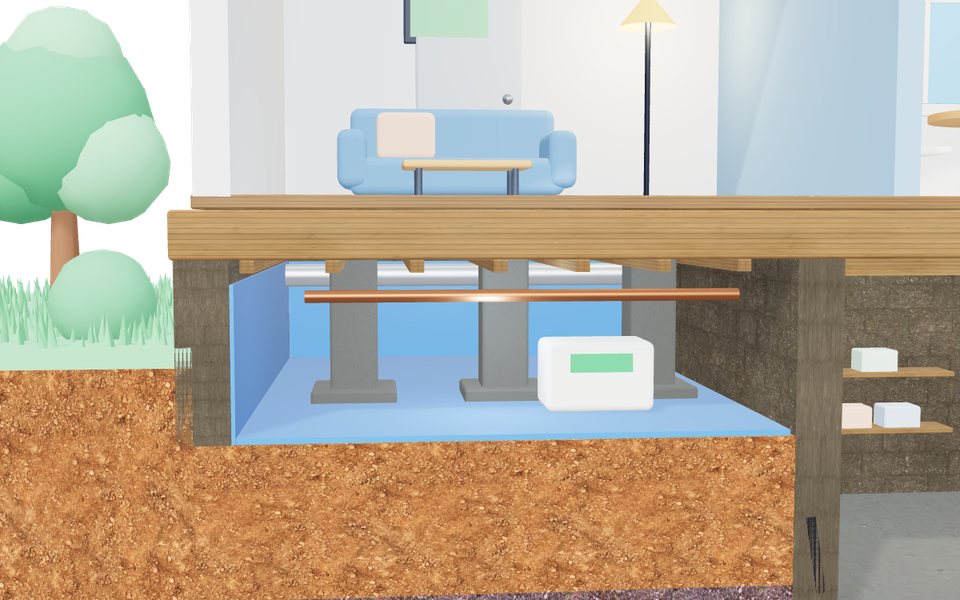
Ask three neighbors about crawl space vents and you'll get three different answers. Some folks open them on Memorial Day and close them at Thanksgiving, because that's what their dad did. Crawlspace venting advice has changed quite a bit over the years, and it depends a lot on where you live.
Why crawl spaces were built with vents
Crawl spaces got vents so that air moving through would carry moisture out. The thinking made sense on paper: damp air leaves, drier air comes in, and the wood stays dry.
The trouble is that it only works if the outside air is drier than the air under your house. In a humid Georgia or Carolina summer, it isn't. That air comes in at 90°F with plenty of moisture and hits surfaces cooled by your AC ducts. Water condenses out of it, and a vented crawl space can end up wetter because of its vents.
In a dry climate like West Texas or Utah, vents still do what they're supposed to. That's the reason nobody can give you one answer that works for every house.
- Hot, humid summer air flows in through the vents.
- It hits cool ducts and joists, and water condenses.
- Sealed: the vents close, and a liner covers the ground.
- A dehumidifier keeps the air steady all summer.
Crawl space vents open or closed?
Should a crawl space vent be open or closed? It depends on the season and the climate. The big lesson of the last few decades is that vents usually shouldn't stay open in humid summers.
| Climate | Summer | Winter |
|---|---|---|
| Humid (Southeast, Gulf Coast) | Closed, if sealed and controlled | Closed |
| Mixed (Mid-Atlantic, Midwest) | Depends on humidity readings | Closed in hard freezes |
| Dry (Southwest, Mountain West) | Open usually works | Closed in hard freezes |
| Rainy, mild (Pacific Northwest) | Depends on readings | Depends on readings |
If you aren't sure, leave a hygrometer down there for a couple of weeks. The number will tell you more than the calendar.
The old rule was to open vents in summer and close them in winter, and a lot of people still follow it. That rule made sense on paper, but the numbers often say the opposite in humid places. Summer air can carry far more moisture than the cool space it's entering. So if you're asking about a crawl space vent open or closed in July, and you live in Georgia, closed with humidity control usually wins.
Should I close my crawl space vents in the winter?
Yes, close your crawl space vents in the winter if you get hard freezes. Cold air blowing across water pipes can freeze them, and a burst pipe in a crawl space can run for hours before you notice. It's the most practical reason to close them.
The usual trigger is when nights start dropping below about 32°F. Your floors will also feel warmer. If your pipes run along an outside wall, wrap them in insulation too, since closed vents don't guarantee they won't freeze.
Crawl space ventilation requirements
Crawl space ventilation requirements come from your local building code, and they vary by city. Many codes ask for either a certain amount of vent opening or an alternative, such as a sealed space with a ground cover and active moisture control.
We won't quote numbers here, because the code that applies to your home is the one your city adopted, and it may have local changes. Call your building department before you permanently seal anything, or ask your contractor to do it. They've usually seen it all before.
Whichever way you go, a ground cover matters. Bare dirt puts moisture into the air day and night, and no amount of venting keeps up with that. A plastic liner on the ground is cheap, and it's often the first thing we'd suggest, even if you plan to keep your vents open.
Sealed vs. vented crawl spaces
The debate over crawl space encapsulation vs venting usually comes down to your climate and your readings. In humid areas, sealed usually wins. In dry areas, it might not be worth the money. A sealed space means liner, closed vents and a dehumidifier, and that's what we do with sealing and encapsulating your crawl space.
| Factor | Vented | Sealed |
|---|---|---|
| Humidity control | Follows outside air | Held under about 60% |
| Upfront price | Low | Higher |
| Running cost | None | Dehumidifier electricity |
| Pipes in winter | Need protection | Stay warmer |
| Good fit | Dry climates | Humid and mixed climates |
If you'd like to compare numbers, here's the encapsulation price per square foot. If you've got actual water, read why your crawl space gets wet first, because sealing won't stop a leak.
Do crawl space vent fans help?
Crawl space vent fans sometimes help, but they often make things worse. A fan pulls more outside air through the space. If that air's humid, you've just sped up the problem. We've seen plenty of fans running all summer in crawl spaces that kept getting wetter.
They can make sense in a dry climate, or with a humidity sensor that only runs when the outside air is drier. For most homes in the humid half of the country, we'd spend the money on stopping the moisture instead. It's a small thing, but it's one of the more common sales pitches we hear about. If you're also dealing with cracks or sloping floors, that's a different problem, and the team that fixes foundations can check everything in one trip.
Crawl space venting questions
Does a crawl space need ventilation?
Not always. A traditional crawl space needs vents under many local codes, but a properly sealed and conditioned one can be allowed without them. The space needs moisture control one way or the other. Check your local code before making changes, because it varies by city.
How many crawl space vents do I need?
It depends on your crawl space size and your local code. Requirements are set locally, and they can change depending on whether a ground cover's installed. Your building department can tell you what applies. A contractor can also check that your existing vents meet it.
Should vents be closed during rain?
It usually doesn't matter much, unless rain is blowing directly in. The vents aren't what lets most rainwater in. Grading and gutters are far more likely to be the cause. If water comes through a vent at ground level, the soil outside is probably too high.
Can I just block the vents myself?
We wouldn't, without a plan. Closing vents without a ground liner or dehumidifier can trap moisture and make things worse. Gas appliances down there may also need outside air to run safely. Fix the ground moisture first, and have someone check any combustion appliances.
When should I close crawl space vents?
Close them in freezing weather to protect your pipes, usually when nights stay below about 32°F. In humid summers, keeping them closed makes sense if the space is sealed and has humidity control. A simple rule is to open them only when the air outside is drier than inside.
How do you close crawl space vents for winter?
Most have a slider or lever you can push closed. Older vents without one can be covered with foam vent plugs from a hardware store, cut to fit. Reopen them in spring if your crawl space relies on venting, and keep an eye on your humidity all year.
How do you vent a crawl space properly?
Clear all vents of soil and plants, and make sure there's a vent near each corner so air moves through. Lay a ground cover to cut down on moisture rising from the dirt. Your local code sets the rest, including how much opening you need for your floor area.
Run into a term you don't know? This may help: foundation repair glossary.