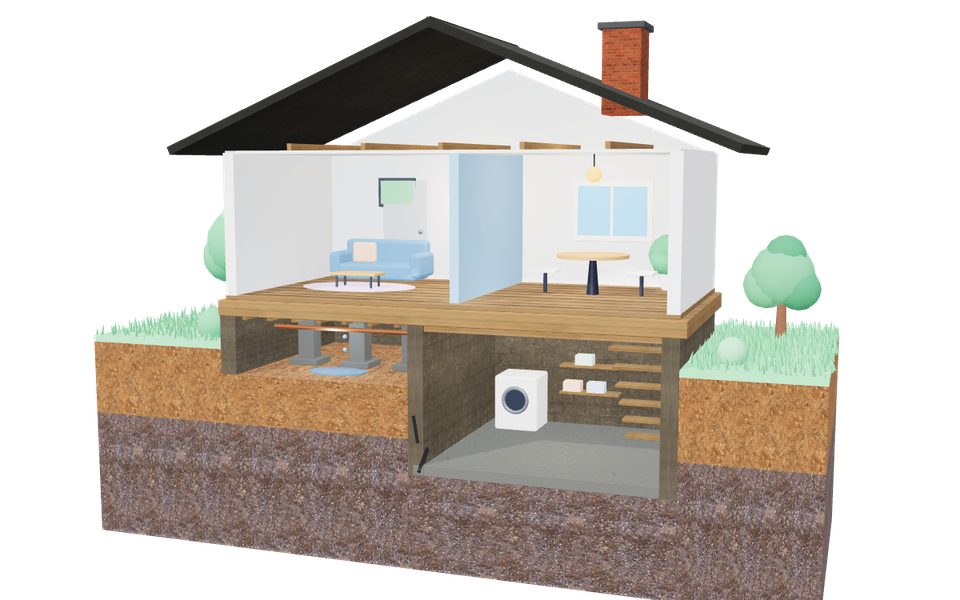
Tacoma's rain may not be dramatic, but it doesn't really stop. Under many of the city's older homes, a crawl space has been damp since sometime in October. Crawl space repair in Tacoma usually means dealing with the wood that's been sitting in that air.
We work around Pierce County, from Lakewood to Gig Harbor. Whether you need crawl space repair tacoma wa homes commonly ask for, or foundation repair tacoma homeowners call about for cracks and settling, it starts with a look underneath.
The short answer
Crawl space repair in Tacoma usually means fixing what constant damp has done. Soft beams, fallen insulation and sagging floors are common. Most jobs replace failed supports and damaged wood, then deal with the water and humid air so it doesn't come back. A sealed space stays much drier through the rainy months.
Why foundations move in Tacoma
Foundations move in Tacoma because of months of steady rain on slow-draining soil. Glacial soils here often include dense layers that water can't pass through. Water sits on top of them, right at the level of your crawl space floor.
Air is the other half. In the Puget Sound area, the humidity stays high from fall through spring, and vented crawl spaces rarely dry out. Wood stays damp, insulation sags and mold gets comfortable.
Many of Tacoma's homes are old enough to have original posts and footings. Over decades, those can sink in soft soil or rot where they meet the ground.
What we fix in Tacoma
- crawl space repair: Our most common job here: new supports, sills and beams.
- crawl space waterproofing: Crawl space waterproofing tacoma homes need for rainy-season water.
- crawl space encapsulation: Sealing the space and controlling humidity.
- sagging floor repair: Sistering joists softened by years of damp.
- foundation piers: Deeper support when old footings have settled.
- free foundation inspection: Moisture readings, photos and a plain explanation.
Neighborhoods and nearby towns we serve
We cover Tacoma and its surrounding towns, including the Gig Harbor side of the Narrows.
- Lakewood
- University Place
- Puyallup
- Federal Way
- Gig Harbor
- Fife
This is one of the areas we cover in Washington. See every city we serve nearby.
What foundation repair usually runs in Tacoma
Foundation repairs usually run $2,200–$8,100 nationally, and major jobs can reach $10,000–$30,000. Those are national ranges, not Tacoma prices, and your exact price depends on what we find at the inspection. Here's more on foundation repair cost.
Low crawl spaces and damp, muddy conditions add labor. Drainage and sealing are usually separate lines. How much wood's been damaged usually decides the rest.
How your free inspection works
- We take moisture readings, ideally after a good rain.
- We photograph the posts, beams and insulation, and read the floors above.
- You get a written plan that handles water first, and then the structure.
Foundation repair in Tacoma: common questions
Why is my Tacoma crawl space always damp?
Because the air is humid for months, and the soil holds water close to the surface. Vents can't dry anything out when outside air is just as damp. A ground liner and sealed space usually make the biggest difference. A drain may be needed too, if water comes in.
Do you replace crawl space insulation?
Yes. Wet or fallen fiberglass comes out, since it holds moisture against the wood. We then fix the source of the moisture, and we'd usually insulate the walls with foam board instead. Putting new fiberglass in a damp space just restarts the same problem within a few years.
Do I need a permit for foundation repair in Tacoma?
It depends on the job and the address. Small crack repairs often don't need one, while structural work usually does. Check with the Tacoma building department; we handle permits where they're required. We'll tell you up front if your repair needs one and include it in your written estimate.
How soon can you inspect my home in Tacoma?
Usually within a few days. Book online and we'll confirm a time. We'll ask for your ZIP code first to confirm that your Tacoma address is in our area. Most visits take 45–90 minutes, and you'll want to be home so we can walk you through what we find.