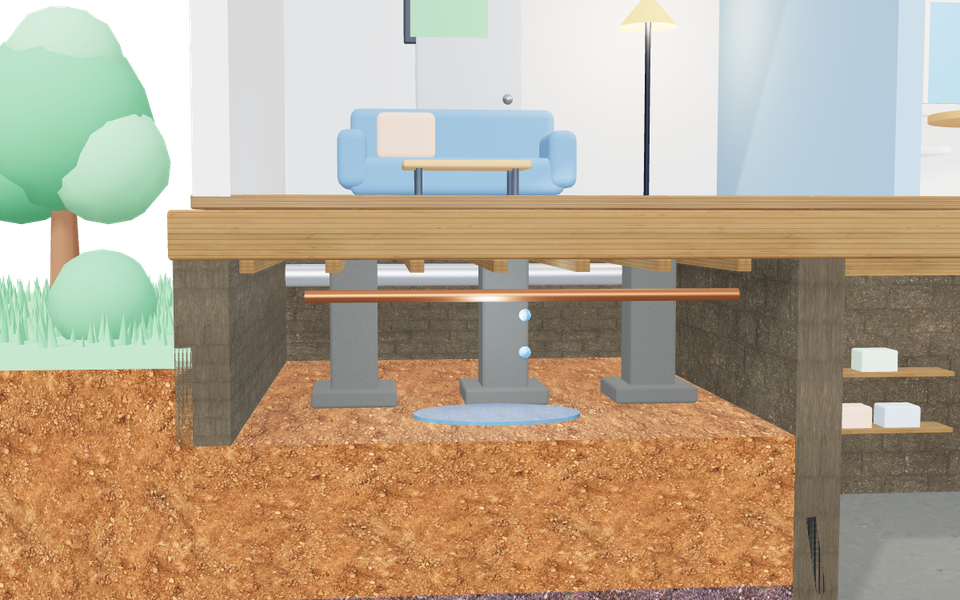
Older homes on piers and beams are common across Texas, Louisiana and the South, especially those built before the 1960s. They sit on top of the soil, so they move when the soil moves. If you live in one, you've probably felt it in the floors.
Pier and beam foundation repair almost always combines two things: leveling the house and fixing the wood. We'll explain it with numbers, so you can see exactly how far out of level you are.
The short answer
Pier and beam foundation repair re-levels a raised house and replaces whatever failed underneath. Most jobs use hydraulic jacks to lift the beams a little at a time, steel shims to hold them and new wood where rot has set in. Plan on 1–2 days for typical work.
Signs your pier and beam house needs work
Your floors usually tell you first. Here are the signs we hear about most, and any two together are worth a closer look:
- Floors that bounce when you walk across them
- A slope you can see, or feel in your ankles
- Gaps opening between baseboards and the floor
- Doors that won't close or swing open on their own
- Cracks at the corners of door frames
- A musty smell coming up from below
Want to understand the structure first? We've got a guide on how pier and beam works with a layer-by-layer diagram.
How we do pier and beam repair
We do pier and beam repair from under the house, and most homes need more than one of these four steps. Repairing pier and beam foundation parts this way means foundation repair pier and beam owners need rarely touches their floors. Moisture comes last in this list, but it's often the reason you're doing the others.
Re-shimming with steel shims
Shims are the small spacers between a pier and the beam on top of it. Wood ones rot and crush over time, which is why your floors have dropped. We use steel shims instead because they don't crush, rot or attract termites.
Replacing rotted beams, sills and joists
We test wood with a probe, and anything soft comes out. Temporary jacks hold the load while we cut out the damage and set new lumber. We'll show you pictures, so you can see why we replaced it.
Adding or replacing piers
Some homes don't have enough piers, and some have piers that have sunk or tilted. We set new ones on footings, using precast or poured concrete. Spacing depends on the beams and the load above.
Fixing the moisture under the house
Damp air is what rots the wood in the first place. If it stays damp, you'll be replacing wood again in a few years. That's why we'll check humidity and may suggest crawl space encapsulation if the numbers call for it.
- A crushed wood shim lets the beam and floor drop.
- A hydraulic jack lifts the beam a little at a time.
- A steel shim slides in on top of the pier.
- The jack comes out, and the floor reads level.
Pier and beam leveling: how it actually works
Pier and beam leveling works in five steps, and the key is going slowly. We lift a little at a time, because old framing can crack if you rush it. Leveling a pier and beam house isn't about reaching perfect. It's about getting as close as the house can safely go.
- Read the elevations. We measure every room and turn it into a color map.
- Plan the support points. We mark where to lift and what to replace.
- Lift gradually. Pier and beam house leveling uses several jacks moving together, in small amounts.
- Re-shim. Steel shims go in to hold the new height.
- Read it again. You get the second set of numbers next to the first.
Pier and beam foundation leveling can also close some of those door gaps, though old plaster doesn't always go back the way it was.
How often does a pier and beam house need leveling?
In clay soil areas, it's normal to have it checked every few years, and some homes need adjusting about that often. Pier and beam leveling is more of a maintenance item than a one-time fix, since the ground keeps moving with the seasons.
A good repair stretches that out. With steel shims, solid wood and drainage that keeps water away from the piers, the interval gets longer. We'd rather tell you that now than have you surprised in 5 years.
What it usually runs
Re-shimming usually runs $1,500–$6,000, and beam replacement runs $1,500–$6,000. Those are typical ranges, and your exact price depends on what we find at the inspection. See what leveling usually runs for more, or read about foundation repair prices across other types of work.
Crawl height is the big variable, along with how much wood's gone bad. A free inspection answers both, and you'll get the number in writing.
Pier and beam repair questions
Can you level a pier and beam house yourself?
We don't recommend it. Lifting one spot too fast can crack walls, break pipes and overload a beam that's already weak. You can measure and document it yourself, though, and that part's useful. The lifting takes multiple jacks, a plan and someone who has done it before.
How long does leveling take?
Most pier and beam jobs take 1–2 days. Longer jobs usually involve replacing rotted beams or adding piers. We don't rush the lift, because older framing needs time to move. Your written plan will list how many days to expect and what you'll notice while we're there.
Will leveling crack my drywall?
It can. A cosmetic crack may appear as the framing moves back, while others may close up. We tell you that before we start, so it isn't a surprise, and we take photos first. Touch-up work is usually a small part of the whole job.
Is pier and beam better than slab?
Neither is better everywhere. Raised homes give you access to pipes and handle moving soil well, but they need more upkeep and moisture control. Slabs need less care but they're harder to fix. Our guide on how raised homes are built goes into the trade-offs.
What makes the best pier and beam foundation repair?
The best pier and beam foundation repair measures before and after, uses steel shims instead of wood, and fixes the moisture that caused the damage. If a contractor can't show you the numbers, you can't tell if your house really got any closer to level.
How do you level a pier and beam house?
We read the floor heights, plan support points, then lift with hydraulic jacks a little at a time. Steel shims go in on top of the piers to hold the new height. Then we read each room again. Rotted wood gets replaced before we lift, not after.
How much can a pier and beam house be raised?
As much as the house can take without damage, and usually only a little at a time. Many jobs recover 1 to 3 inches. Older homes with brittle plaster may stop short of perfectly level, because the last 1/2 inch can cause more damage than it's worth.
What causes pier and beam foundations to fail?
Moisture and soil movement cause most failures. Clay soil shifts the piers, wood shims crush or rot, and damp air softens the beams and sills. Termites add to it. Plumbing leaks under the house are another big one, since a slow drip can undercut a pier for years.
Run into a term you don't know? This may help: foundation terms explained.