The short answer
Water in crawl space areas usually comes from poor drainage and bad grading, plumbing leaks or humid air that condenses on cool surfaces. Standing water is never normal. Turn off power if wiring is near the water, stop any leak you can find, and then trace where it's getting in.
Key takeaways
- Standing water is never normal, even after a big storm.
- Humidity above 60% is a problem even when the ground looks dry.
- Check gutters and grading first, because they're often the cause.
- Drainage handles liquid water, and sealing handles damp air.
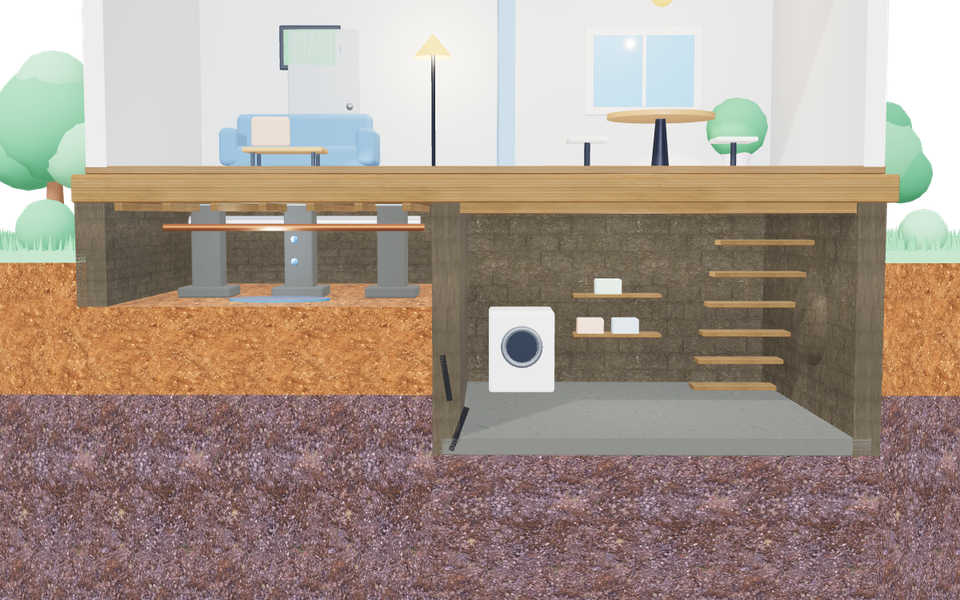
You popped the hatch and saw it, or your plumber came back up and gave you that look. Now you've got water in the crawl space and a dozen questions. Take a breath. This is common, it can be fixed and most of it isn't an emergency in the first hour.
Is water in a crawl space normal?
Standing water in a crawl space isn't normal, not even after a hard rain. A healthy crawl space stays dry all year. If you can see puddles, mud or water lines on the piers, something needs fixing.
A little condensation can happen in summer, though. Humid air meets a cold water pipe, the pipe sweats and a few drops land on the ground. That's a humidity issue instead of a leak, and it's a smaller problem, though it's still worth dealing with.
Where crawl space water comes from
Crawl space water usually comes from one of four places, and many wet crawlspace problems involve two at once. It helps to figure out which one you've got before you spend any money.
- Rain and poor drainage send water through the wall.
- A high water table pushes up through the ground.
- A plumbing leak drips from above.
- Humid air condenses on cool ducts and pipes.
Rain and drainage
This is the most common cause. Clogged gutters, short downspouts and soil that slopes toward the house all send roof water straight to your foundation. If it only gets wet after rain, start here.
High water table
In low-lying or coastal areas, groundwater can rise from below. You'll see water coming up through the floor of the crawl space, often days after the storm. Drainage and a pump are usually the answer.
Plumbing leaks
A leaking supply line runs all the time, whether it rained or not. A leaking drain only runs when you use the water. If the wet spot's right under a bathroom or the kitchen sink, check there first.
Condensation
Warm, humid air coming through the vents hits cool ducts and pipes, then turns to water. It's why many crawl spaces feel wetter in July than they do in January. You'll often see beads of water on the ducts.
Crawl space moisture vs. standing water
Crawl space moisture is water in the air, while standing water is liquid on the ground. They need different fixes, so you've got to know which is which.
Measure it with a $15 hygrometer. Readings above 60% for days at a time let mold grow and let wood soak up water. Once wood passes about 20% moisture content, decay can start. The EPA's guide to moisture and mold is a good place to learn more.
What water does to your house
Water does slow, expensive damage to the structure and the air. Here's the usual order of events:
- Mold grows on joists and on anything organic down there.
- Wood rots, starting with the sill plates and the ends of joists.
- Termites and other pests move in, since they love damp wood.
- Floors start to give, and you begin to feel soft spots upstairs.
That last one's where fixing a floor that dips enters the picture. Insulation falls, ducts rust and your energy bill climbs. None of it happens in a week, but all of it adds up.
What to do today if your crawl space is wet
If your crawl space is wet today, make it safe first and then slow the water down. Here's the order we'd follow:
- Stay out if there's water near wiring. Go to the panel and turn off power to that circuit if you can get there from a dry spot.
- Stop the water you can stop. If a pipe's leaking, shut off the main valve.
- Take photos and video. They help with insurance and with figuring out the cause.
- Move the water. Pump it out, or call someone who can.
- Move the air. Run fans, and add a dehumidifier once the puddles are gone.
Don't crawl through water to get a better look. Water hides things like broken glass, open wiring and sewage.
How to get moisture out of a crawl space
To get moisture out of a crawl space, you remove the source first, and then dry the air and the wood. A dehumidifier with a hose to a drain is the main tool. Fans help move air around, and both can run for days.
Wet wood takes much longer to dry than you'd think, sometimes weeks. Check it with a moisture meter from a hardware store for about $30. Wet insulation should come out, because it won't dry well and it holds water against the wood.
That's the short version of how to get moisture out of crawl space areas. Keep measuring as you go, because the air can read fine while the wood is still damp.
How to keep moisture out for good
To keep moisture out of a crawl space for good, you handle the liquid and then the air. Those are two separate jobs, and many homes need both.
Liquid water calls for getting the water out from under your house with a drain and sump pump, after you've checked your gutters and grading. Damp air calls for crawl space encapsulation, which means a sealed liner, closed vents and a dehumidifier.
Do the drainage first. Water trapped under a new liner is worse than what you started with. You can read about what sealing a crawl space costs before you get any bids. If the moisture has already started to move your floors or walls, our local repair crews can look at that in the same visit.
If you're wondering how to keep moisture out of crawl space areas on a small budget, start with a ground liner and your gutters. They won't solve everything, but they cost little, and they'll show you how much of the problem is left.
Crawl space water questions
Should I worry about a little water in my crawl space?
Yes, at least enough to find out where it's coming from. A small damp spot after a rare storm isn't an emergency, but water that keeps coming back will soften wood and feed mold. Mark the edge of the wet area with a stick and check it after the next rain.
Will a dehumidifier fix a wet crawl space?
Not if there's liquid water. A dehumidifier pulls moisture from air, so it can't keep up with puddles and it'll run constantly. Fix the water first with drainage or a plumbing repair. Then a dehumidifier can do its real job of keeping humidity below 60%.
Does homeowners insurance cover crawl space water?
Sometimes. A burst pipe is often covered, while groundwater seeping in usually isn't. Flood damage generally needs a separate flood policy. Call your agent before you start any major cleanup, and take dated photos. Mold coverage is often limited, so ask about it directly.
How fast does mold grow in a wet crawl space?
It can start within 24 to 48 hours once the wood and air stay wet. Visible growth often takes longer, and it can spread quietly for months before you smell it. Dry things out as fast as you can, and the EPA's mold guide has good cleanup advice.
How do you lower moisture in a crawl space?
Start outside with gutters and grading, then fix any leaks. After that, cover the ground with a vapor barrier and control the air with sealing and a dehumidifier. In humid climates, closing the vents usually helps. Keep a hygrometer down there so you can see if it's working.
How do you moisture-proof a crawl space?
You drain liquid water, then seal the space from ground moisture and outside air. That means a drain and pump if needed, a 12 to 20 mil liner on the floor and walls, sealed vents and a dehumidifier. Doing that in the wrong order traps water under the liner.
Is mold in a crawl space dangerous?
It can be, mainly for people with allergies, asthma or weak immune systems. Air from below does rise into the house, so mold under your floors isn't just a crawl space problem. Fix the moisture first, since mold returns if the wood stays wet. Wear an N95 if you go down there.
Run into a term you don't know? This may help: foundation terms explained.