Austin is really two cities as far as soil goes. A bungalow in Hyde Park and a new build out in the Hill Country sit on very different ground, and they fail in different ways. Foundation repair in Austin has to start with knowing which one you've got.
We inspect homes across the area, from Travis Heights to Round Rock and Kyle. If you've been comparing austin foundation repair companies, ask each one what's under your particular lot. It's the question that sorts them out fastest.
The short answer
Foundation repair in Austin depends on where you live. East of I-35, expansive clay moves slabs and needs piers. To the west, shallower limestone can change how a job goes. Older central bungalows on pier and beam often need re-leveling. A free inspection tells you which one you've got.
Why foundations move in Austin
Foundations move in Austin because of a sharp change in the ground running roughly along I-35. To the east sits Blackland Prairie clay, which swells and shrinks hard with the weather. To the west, the Hill Country has thin soil over limestone, and that behaves very differently.
The houses add another layer. Central neighborhoods like Hyde Park and Travis Heights are full of older pier and beam bungalows that sag and need attention every so often. Newer suburbs are mostly slab, and those show cracks and door problems instead.
Long droughts make all of it worse by drying out clay. Then a flood-year spring brings it back. A foundation leak repair austin homeowners call about can also start with a plumbing line stressed by that movement.
What we fix in Austin
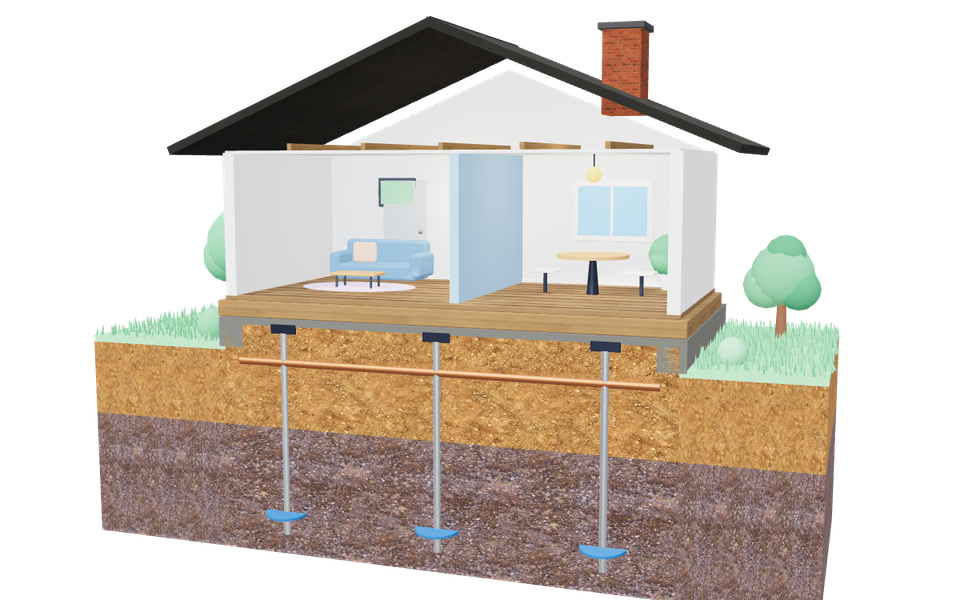
- slab foundation repair: Slab foundation repair austin suburbs need most, using piers through the clay layer.
- House leveling in Austin: Slow lifting and steel shims for central bungalows.
- pier and beam foundation repair: Replacing tired shims, beams and sills in older raised homes.
- foundation piers: Support that reaches firmer ground, whose depth changes a lot across town.
- foundation crack repair: Sealing leaks and cracks once we know what caused them.
- free foundation inspection: Readings in every room, whichever side of I-35 you live on.
Neighborhoods and nearby towns we serve
We cover central Austin and the surrounding towns. The soil can change within a few miles here, so we look at each house on its own instead of assuming things based on the ZIP code.
- Round Rock
- Pflugerville
- Cedar Park
- Georgetown
- Kyle
- Buda
- Leander
This is one of the areas we cover in Texas. See every city we serve nearby.
What foundation repair usually runs in Austin
Foundation repairs usually run $2,200–$8,100 nationally, and major jobs can reach $10,000–$30,000. Those are national ranges, not Austin prices, and your exact price depends on what we find at the inspection. Here's more on foundation repair cost.
What moves the number here is whether you're on clay or limestone, whether the home's raised or on a slab, and how much old wood needs replacing. A foundation repair austin tx estimate for a bungalow can look nothing like one for a new slab in Pflugerville.
How your free inspection works
- We ask what you've noticed and look at where your lot sits on the clay-to-limestone line.
- We read every room, and check under the house if it's raised.
- You get a written plan with options, including an honest answer if it can wait.
Foundation repair in Austin: common questions
Are east Austin and west Austin foundations different?
Yes, usually. East of I-35, deep expansive clay moves slabs a lot, and piers are common. West of it, limestone often sits closer to the surface, so soil movement is less of an issue, though slopes and drainage can cause their own trouble. Your exact lot matters more than the map.
Do older Austin bungalows need re-leveling?
Many do, every several years. Pier and beam bungalows sit on soil that shifts with the seasons, and their wood shims crush over time. A check every few years is normal. Swapping wood shims for steel and keeping the crawl space dry can stretch out the time between adjustments.
Do I need a permit for foundation repair in Austin?
It depends on the job and the address. Small crack repairs often don't need one, while structural work usually does. Check with the Austin building department; we handle permits where they're required. We'll tell you up front if your repair needs one and include it in your written estimate.
How soon can you inspect my home in Austin?
Usually within a few days. Book online and we'll confirm a time. We'll ask for your ZIP code first to confirm that your Austin address is in our area. Most visits take 45–90 minutes, and you'll want to be home so we can walk you through what we find.