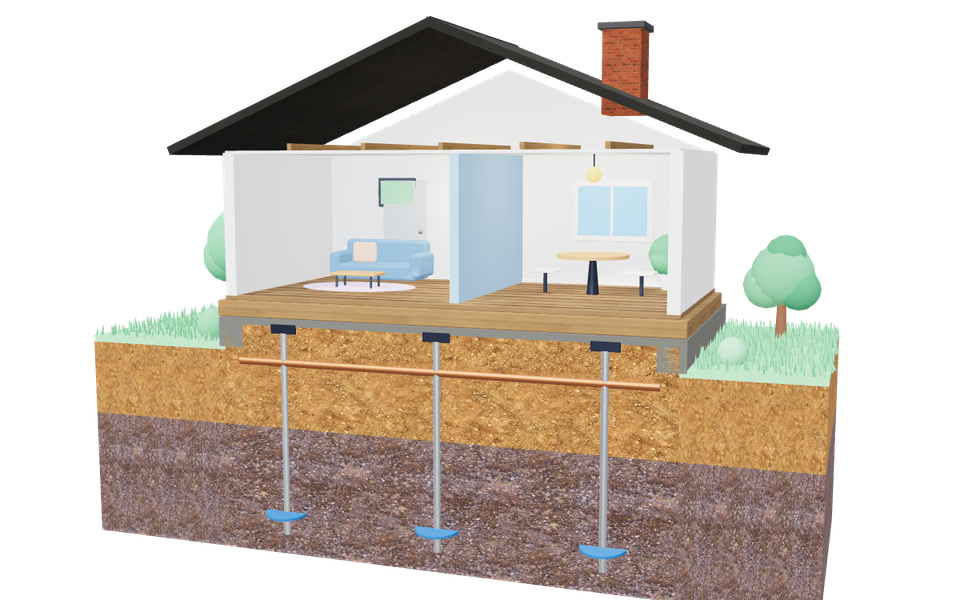
A marble rolls across your kitchen in Travis Heights, and the bedroom door swings open on its own. Older Austin homes do that, especially ones built on piers before the slab era. House leveling in Austin brings those floors back up without pretending the house is brand new.
We work on central bungalows and on homes east of I-35, where the clay moves the most. Whether you call it house leveling austin tx or just getting the floors fixed, we start with a survey of every room.
The short answer
House leveling in Austin brings sagging floors back toward level, usually in older pier and beam bungalows and in homes on east side clay. Crews lift slowly and replace wood shims with steel. Slab homes are lifted on piers instead. Expect 1–3 days, plus readings before and after to show the change.
Why foundations move in Austin
Austin floors go out of level because of two different problems. Central bungalows sit on piers, with wood shims and old beams that wear out over the decades. East of I-35, Blackland clay swells and shrinks enough to move a home up and down with the seasons.
Long droughts push it further by drying out the clay under the edges of a home. When big rains come, they don't return the house to where it was. So a slope builds up a little more each year, until you notice it in the doors.
Foundations in the Hill Country to the west move less, though cut-and-fill lots there can settle. Austin house leveling looks different on each side of town, so we check before we plan.
What we fix in Austin
- house leveling: Slow lifting and steel shims, with readings at each stage.
- pier and beam foundation repair: Replacing rotted wood before anything goes up.
- slab foundation repair: Lifting slab homes on piers, when clay has pulled them down.
- crawl space repair: Adding supports and replacing old stacked block.
- foundation crack repair: Checking and sealing cracks after the lift.
- free foundation inspection: A full survey with photos and a written plan.
Neighborhoods and nearby towns we serve
We level homes across central Austin and the surrounding towns. Older central homes tend to be pier and beam, and most of the suburbs are slab.
- Round Rock
- Pflugerville
- Cedar Park
- Georgetown
- Kyle
- Buda
- Leander
This page covers one service. For everything else we do here, see foundation repair in Austin.
What foundation repair usually runs in Austin
Foundation repairs usually run $2,200–$8,100 nationally, and major jobs can reach $10,000–$30,000. Those are national ranges, not Austin prices, and your exact price depends on what we find at the inspection. Here's more on foundation repair cost.
Crawl height, shim condition and how much wood needs replacing drive most leveling jobs here. On slabs, it comes down to pier count.
How your free inspection works
- We read the elevation of every room and make a color map.
- We go under the house to check piers, shims and beams.
- You get a written plan showing where we'll lift and how far.
House leveling in Austin: common questions
How long does a leveled Austin bungalow stay level?
Usually several years, sometimes much longer. It depends on your soil, how good the piers are and how well water drains away from the house. Steel shims hold up far better than wood. A check every few years catches small changes before you feel them in the floors.
Can you level my Austin home without damaging old plaster?
We can reduce the risk, but we can't remove it. Old plaster doesn't flex much, so we lift in small steps and may stop short of dead level. We take photos before we start. Some cracks may close, and others might appear, and we tell you that up front.
Do I need a permit for house leveling in Austin?
It depends on the job and the address. Small crack repairs often don't need one, while structural work usually does. Check with the Austin building department; we handle permits where they're required. We'll tell you up front if your house leveling needs one and include it in your written estimate.
How soon can you look at my Austin home for house leveling?
Usually within a few days. Book online and we'll confirm a time. We'll ask for your ZIP code first to confirm that your Austin address is in our area. Most visits take 45–90 minutes, and you'll want to be home so we can walk you through what we find.